
AI – Driving Future Exploration
Date/Time: Monday, November 2 | 3:00pm
Location: Hudbay Stage
Quminex Abstract: New Data-Driven Approaches to Aid Exploration Decision-Making
Speaker: Alan Baxter
Early-stage mineral exploration represents the highest-risk segment of the mineral supply chain, often consuming 12 of the 16 years typically required to derisk a prospect. While the industry frequently attempts to apply “big data” algorithms to accelerate decision-making, mineral exploration actually faces a small, fragmented data reality. Regional datasets vary wildly in resolution, multi-modal coverage is inconsistent across prospects, and well-documented deposit training labels are globally scarce.
Two main modeling paradigms dominate current industry discussions: deep learning and classical machine learning. Deep learning models rely on data-intensive, raster-based frameworks that require vast, consistent datasets to generalize effectively. When forced onto sparse exploration data, these models risk memorizing specific training targets rather than learning transferable geological rules. Furthermore, because deep learning optimizes via abstract, self-derived features, its outputs remain an uninterpretable “black box” to geoscientists.
Conversely, classical machine learning operates effectively on sparse, non-raster datasets but relies on explicit, human-derived inputs. While historically viewed as less sophisticated, feature engineering inspired by deep learning can bridge this gap. By pairing human-designed, explainable features with robust classical models, geologists and exploration managers gain an objective framework to evaluate model outputs, understand trade-offs, and derisk prospects with confidence.
VRIFY Abstract: Targeting 4.0: Data-Driven Prospectively Mapping in Manitoba’s Superior Province
Speaker: Ed Nelles
Mineral exploration increasingly demands that geoscientists not just integrate complex, multi-layered datasets to identify targets, but also communicate results in a simple and consistent manner.
VRIFY has developed a suite of tools to support this reality, including a geoscience-led prospectivity mapping software. VRIFY Predict uses pretrained vision transformers to assess exploration potential and generate targets for multiple commodities from a wide variety of datasets and known mineral occurrences.
In this session Vrify will use a portion of Manitoba’s Superior Province as a case study, assessing prospectivity for multiple commodities using publicly available data, including lake sediment geochemistry, ground gravity, and airborne magnetics. A data-driven workflow within the software converts these heterogeneous inputs into high-resolution, probabilistic prospectivity maps within a unified processing framework.
The process is grounded in data but is also flexible and iterative, enabling geoscientists to apply their geological expertise through layer selection and data augmentation. This approach lets that expertise shape the outcome in a rapid and repeatable manner with the support of advanced AI.
The results derived from the workflow are explainable and will be showcased in context, in a consistent, visual format that supports rapid review, iteration, and communication, helping teams move more efficiently from data to decision.
Speakers
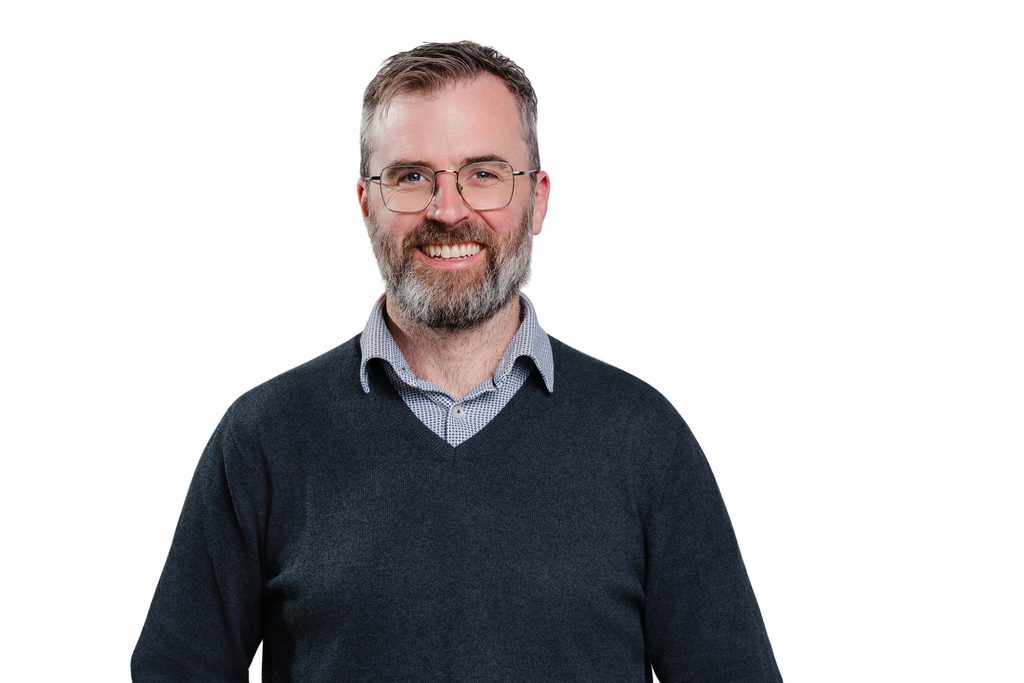
Alan Baxter, Quminex
Alan Baxter is CXO of Quminex, with expert knowledge in tectonics and metallogeny. He has over 20 years of experience in academic research, working on projects across the globe. He also has 3 years of experience working as a geological consultant for industry in the US and Australia, working on base metal, gold, and nickel deposits. Alan holds a PhD from the University of Hong Kong, and a BSc from Trinity College Dublin, Ireland. Alan is a Professional Geologist in Ontario and Ireland.

Ed Nelles, VRIFY Senior Geologist
Ed Nelles is a Senior Geologist at VRIFY, a mining tech software company, where he combines geoscience expertise with emerging technology to help exploration teams unlock more value from their data. In his day-to-day, Ed supports clients in leveraging VRIFY Predict including DORA, VRIFY’s AI prospectivity mapping software, to uncover new insights and challenge existing exploration hypotheses.
With an MSc in Geology from Laurentian University, Ed’s experience spans mineral exploration, geological modelling, block modelling, and geometallurgical modelling. He is passionate about advancing technology that embraces geological complexity while delivering scientifically rigorous and accessible insights, keeping geoscientists at the centre of innovation.
Chair
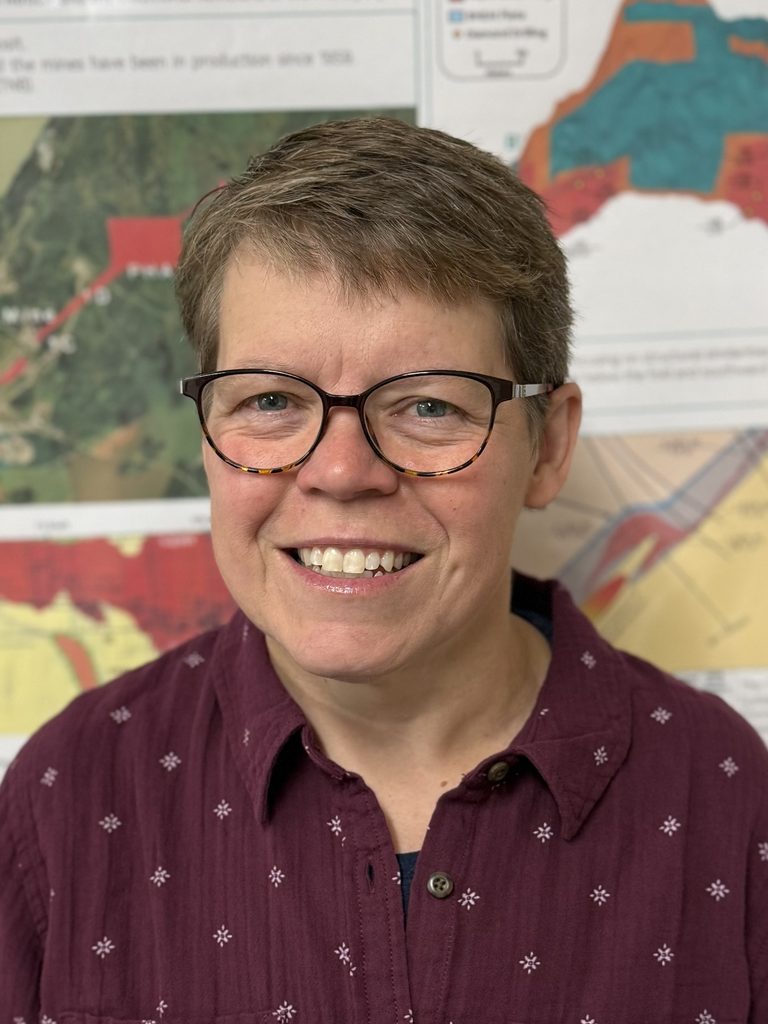
Janet Southern, Vale
Senior Geologist with the Exploration Group at Vale in Thompson, Manitoba, currently specializes in long-range resource estimation.
Janet has more than 30 years of experience in the mining industry. She began her career in gold mining at Golden Patricia Mine in Northern Ontario and later worked at New Britannia Mine in Snow Lake. She also spent a brief period at Chisel North Mine with Hudbay before joining Vale in 2007.
Janet began her career with Vale at Birchtree Mine and has since held a variety of geological roles, including Production Geologist, Drill Geologist, Database Quality Assurance and Quality Control and Long-Range Resource Estimation.